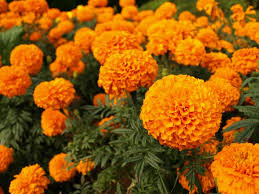
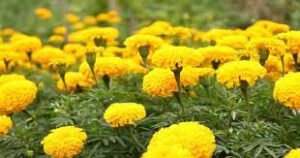
Marigold is most cultivated flower in Nepal followed by rose and gladiolus. It belongs to the genus Tagetes. There are 33 species of genus Tagetes. The most commonly cultivated varieties of Tagetes are known variously as African marigolds originated from Africa (usually referring to cultivars and hybrids of Tagetes erecta) and French marigolds originated from France (usually referring to hybrids and cultivars of Tagetes patula. Tagetes is a genus of annul or perennial mostly herbaceous plants in the sunflower family Asteraceae. Tagetes species vary in size from 0.1 to 2.2m tall. Most species have pinnate green leaves. Blooms naturally occur in golden, orange, yellow and white colours.

Scope and market price of marigold
There is a good scope for marigold cultivation. The important factors which decide the scope for cultivation are soil, climate, labour, transport and market. The price of local marigold is expected to increase this festive season as most marigold have already blossomed in the field, day ahead of the festival. The wholesale price of a metre of marigold garland is expected to cost Rs 60 to 100, depending on quality. For floral garden, indoor decoration, social function and religious function the demand of marigold is increasing day by day.
uses
- It is widely used as loose flower and for making garlands which are used are used mainly in religious events. It is the main flower used in Tihar festival.
- It is also used for decorative purpose in ornamental gardening.
- It is used for the extraction of perfumes and essential oils.
- Oils extracted from marigold can be used as insect repellents.
- Marigold is used to treat irritated skin problems like burns, wounds and rashes, when applied on the skin it reduces inflammation, redness, sensitivity, dryness and swelling.
- Marigold help in body’s detoxification process by removing all toxic materials.
- It also treats ingrown hairs, reduces dermatitis eczema and soothe skin after shaving.
But before start using marigold flowers to help ease a health issue, it is better to consult health practitioner to get the right dosage. Pregnant women and those having allergies may avoid using it.
Propagation method: There are two common methods of propagation of marigold.
- From dry blossom (seed): From this technique young seedling can grow in nursery and that can be transplanted to the suitable place. First of all take dry blossoms and a container. Break apart the seed head and sprinkle over the soil after which cover the seed by a layer of soil and sprinkle water gently over the soil to
avoid uncovering the seeds. After 20-25 days young seedlings will grow and that can be transplanted to the suitable place
Method of transplanting
- Seedlings are ready after 20-25 days, remove the unhealthy seedling to maintain healthy environment.
- Sprinkle the water over the nursery before taking out the seedling from nursery to loose the water.
- The soil for transplantation of seedling should not be too wet.
- In general, spacing should be 30cm*30cm for French marigold and 40 *40cm for African marigold.2.By cutting method: Marigold plant can grow by cutting the branch or young stem by which we can grow many Plant of marigold. The process of cutting is faster, effective and cost-efficient for both commercial and personal use. The marigold is recommended to be cut after monsoon for fresh growth. Actually, the rainy season is good for making cutting of plants. We can grow them throughout the year, but the best time is July to September for growing marigold from cutting. Steps for cutting marigold stems for growing are following:
- we can use both scissors and knife for cutting stems that we have selected earlier.
- Always clean the tools before starting. We should use any disinfectant for cleaning the tool.
- Cut stems of at least 4 Inch size i.e 10 cm minimum. Make a sharp cut just below the leaves. The leaf node will act as a perfect spot for root growth.
- We should make a inclined cut instead of flat cut for faster root growth.
- After cutting the marigold stems place them in a bowl of fresh water. It will protect the stems from drying before we place these in the rooting mix.

- Points that need to be kept in mind before starting marigold Farming:
- Climate: Marigold requires mild climate for growth and flowering. The optimum temperature range for its profuse growth is 18-20o temperature above 35oc restrict the growth of plant. Which leads to reduction in flower size and number. In severe winter, plants and flower are damage by frost.
- Soil: Marigold can be grown in wide range of soil, as it is adopted in different soil type. French marigold are best cultivated in light soil where as a rich well drained, moist soil are best suited for African marigolds. Sandy loam soil with pH 6 to 6.5 is ideal for its cultivation.
- Light: marigold need plenty of sunshine, so it should be in growth in open sunny condition. Marigold is quantitatively short day plant so flowering accelerated by short days.
- Altitude: The suitable altitude for marigold production is above 150m and below 2000m.
- Fertilizer: The compost fertilizer and vermicompost is best for marigold cultivation. Urea and DAP should not be used for betterment. The single super phosphate and potash should be used. Marigold also requires zinc and boron for flower quality and yield.
- Irrigation: Irrigation is done once in a week. But the frequency of water also depend upon soil and season. High use of water can cause decay of seedlings and many fungal infection so proper irrigation is the key of good production.

Disease problem during marigold cultivation:
Marigold are fairly resistant to insect issues but disease in marigold plants are an occasional problem. The most prevalent disease are fungal and affect stems leaves and roots. Among the most common marigold diseases are following:
- Botrytis flower blight: This disease is caused by fungus Botrytis cinerea. The symptoms of this disease are:
- Flower parts are brown and die.
- Gray masses of spores form on the infected tissue when wet.
- Points that need to be kept in mind before starting marigold Farming:
- Climate: Marigold requires mild climate for growth and flowering. The optimum temperature range for its profuse growth is 18-20o temperature above 35oc restrict the growth of plant. Which leads to reduction in flower size and number. In severe winter, plants and flower are damage by frost.
- Soil: Marigold can be grown in wide range of soil, as it is adopted in different soil type. French marigold are best cultivated in light soil where as a rich well drained, moist soil are best suited for African marigolds. Sandy loam soil with pH 6 to 6.5 is ideal for its cultivation.
- Light: marigold need plenty of sunshine, so it should be in growth in open sunny condition. Marigold is quantitatively short day plant so flowering accelerated by short days.
- Altitude: The suitable altitude for marigold production is above 150m and below 2000m.
- Fertilizer: The compost fertilizer and vermicompost is best for marigold cultivation. Urea and DAP should not be used for betterment. The single super phosphate and potash should be used. Marigold also requires zinc and boron for flower quality and yield.
- Irrigation: Irrigation is done once in a week. But the frequency of water also depend upon soil and season. High use of water can cause decay of seedlings and many fungal infection so proper irrigation is the key of good production.
Disease problem during marigold cultivation:
Marigold are fairly resistant to insect issues but disease in marigold plants are an occasional problem. The most prevalent disease are fungal and affect stems leaves and roots. Among the most common marigold diseases are following:
- Botrytis flower blight: This disease is caused by fungus Botrytis cinerea. The symptoms of this disease are:
- Flower parts are brown and die.
- Gray masses of spores form on the infected tissue when wet.Controlling disease of marigold:
- Most marigold plant diseases will be due to fungal spores, so correct watering is key.
- Removing infected plant material can also help limit the spread of disease.
- If the land has heavy clay soil, add sand or other grit to loosen the soil.
- Choose French varieties of marigold rather than the African.
- Fungicide like Astun (group 7 fungicide), Broadform (group 7+11 fungicide) etc can be used to control some diseases.
Harvesting of flower
Marigold should be plucked when they attain the full size depending upon the variety.it should be done in cool hours of the day that is either in the morning or evening. field should be irrigated before plucking. productivity of plants is increased considerably by regular plucking flowers.
Ramita Bhandari 1st sem