Sarmila Bidari Acharya
M.Sc. (Ag) Agronomy
The swearing-in of Balendra (Balen) Shah as Nepal’s 43rd Prime Minister on March 27, 2026, marks the end of the “Post 1990” political era and the beginning of a technocratic experiment. While his 100 point reform agenda touches every sector, his approach to agriculture is particularly radical. It moves away from the traditional “subsidy-first” model toward a “market-first” infrastructure strategy.
Here is an analysis of how the new government administration is realistically expected to reshape the Nepalese Agriculture:
1. Breaking the “Middleman Cartel” (The 25 Day Rule)
The most immediate and disruptive change is the Mandatory Payment Directive. For decades, Nepali farmers have been at the mercy of sugar mills and middlemen who delayed payments for months or even years.
The Change: The government has mandated a 25 day payment cycle. If a buyer fails to pay within this window, the government backed “Price Stabilization Fund” kicks in to pay the farmer directly, while the buyer is hit with a high interest penalty and potential license revocation.
The Reality Check: While bold, this will require massive digital tracking. The government is expected to roll out a “National Farmer ID” linked to bank accounts to ensure these transfers bypass local corruption.
2. The Rise of “Agri-Tech” Municipalities
Prime Minister’s background as a structural engineer influences his view of the farm as a factory. His government is shifting the focus from the federal level down to the Local Units.
Decentralized Cold Storage: Rather than massive, centralized warehouses that are prone to mismanagement, the plan focuses on “Micro Cold Rooms” at the ward level. This allows farmers to store perishable vegetables (tomatoes, onions, potatoes) for 15–30 days, giving them the leverage to wait for better market prices.
Precision Subsidy: The government is moving away from broad fertilizer subsidies (which often leak across the border) toward Soil Health Card linked inputs. Farmers will receive subsidies based specifically on what their soil lacks, reducing waste and cost.
3. Turning “Barren Land” into “Economic Zones”
One of Nepal’s biggest agricultural tragedies is the abandonment of land due to migration. The government views this “fallow land” as a national security issue.
The Land Bank: Unlike previous failed attempts, this government is proposing a Lease Hold Reform. If land remains unused for more than three years, the local government can facilitate a lease to “Agri-Entrepreneurs” or returning migrant youths, with the original owner retaining a percentage of the profit without losing ownership.
Irrigation as a Utility: Treating irrigation like electricity. By offering 60% subsidies on solar lift irrigation, the government aims to make “two crop cycles” possible in the dry hills, where water is available in the valleys but not on the terraces.
4. Youth & Inclusion
A core goal of the RSP manifesto is to reduce forced labor migration by making farming a “viable and respected profession.”
Youth-Centric Farming: Introducing technology based production methods and reliable insurance systems to attract the 42.5% of the population under age 35.
Women Agriculture Loan Program: Targeted subsidized loans specifically for women engaged in large scale or collective farming.
The Realistic Challenge: The “Bureaucratic Wall”
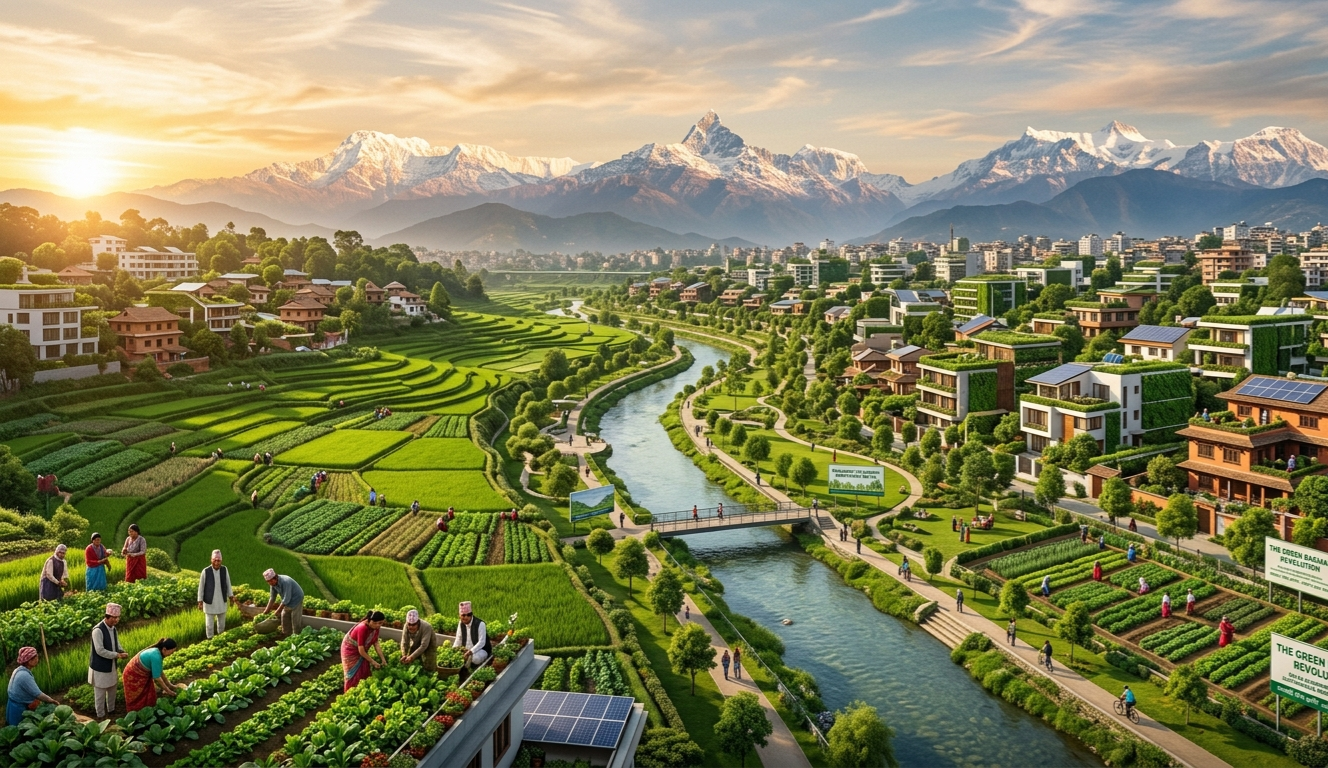
To succeed, Agriculture Minister, must clean up the “Agriculture Knowledge Centers” (AKCs), which have historically been nests of political patronage. If the government can successfully implement the 100 days accountability framework, Nepal might finally see its first “Green Revolution” led not by NGOs, but by home grown tech and political will.
It can be concluded that, by prioritizing local production, aggressive land management, and the integration of modern tech with ancestral wisdom, this movement seeks to transform the farmer from a symbol of struggle into a pillar of economic power. As Kathmandu maneuvers through these reforms, the message is clear: Sovereignty begins in the soil. If the doctrine succeeds, the legacy will not just be recorded in GDP figures, but in the greening of fallow lands and the self-reliance of every kitchen. The path from merely surviving to truly thriving is now being paved.