Sandeep Airee
Agriculture Student
OBJECTIVES
-To understand the importance of bee-keeping and able to give a basic introduction.
-To have a knowledge on status, potential and challenges of bee-keeping in Nepal.
HISTORY
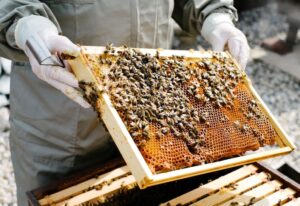
South-East Asia is considered to be the origin of honey bee (may be Nepal but due to lack of manpower fails to claim it). In 2044 B.S. 4 year bee-keeping project by Newzeland was first introduced in Nepal. Modern bee-keeping geared up in 2052 when Durbar Apiculture established at Jugadi, Chitwan.
INTRODUCTION AND STATUS OF BEE-KEEPING IN NEPAL
Nepalhas tremendous opportunities on the beekeeping due to the richness in the honeybee’s species and the availability of plenty pastures diversity. Bee-keeping is the activity of people managing the honey bees in order to collect and other by products, pollinate the crops and raise bees for sale. Its technical name is “Apiculture” and the place where bees are kept is called “Apiary”. There are 9 species of honey bee in the world. Nepal is the richest country in honey bee species Out of 9 species 4 are native to nepal (i.e. Apis cerana, Apis dorsata, Apis laboriosa, Apis florea)
Zonal Sharing Mechanism of Bee species
Apis cerana in log bee hive
Mid-hills: Apis cerana
Terai: Apis cerana indica
In wall bee hive: Mainly found in high altitude and cold areas. Wall bee-hive honey production is > Log bee hive as bees can maintain colony temperature easily in wall beee hive. They are mainly raised with animals.
Giant Honey bees Apis dorsata at water tower
Found in resedential building, agressive in nature, low honey production. It helps to increase the yield and quality of crops.
The Rock Clift bees Apis laboriosa:
The biggest honey bee species in the world and found in Nepal, Bhutan and some parts of China. They are named due to their hard labour nature and migrate to even 1000 miles in search of better food, water and shelter. They usually migrate during winter season.
Apis laboriosa honey hunting preparation in sides of rocks in river basins.
Little Bees Apis Florea:
Dwarf honey bees are by far the most common honey bees throughout tropical Asia. The distribution area of A. florea is generally confined to warm climates. To ward off ant attacks, the workers coat both ends of the nest support with sticky strips of propolis, or “plant gum”, from 2.5 to 4 cm wide. A. florea is the only honeybee that uses this defensive technique. They are the most distinct for its morphology, foraging behavior and defense mechanism.
Stingless Bees:
They are mainly found in western parts of Nepal and mid-hills e.g. Banke, Bardiya, Nepalgunj. They are low cost reared in bamboo and don’t bite.
Exotic Bees Of Apis melifera:
More than 25 sub species are evolved in Africa but believed o be move from Asia. They are quiet and gentle in nature.
BENEFITS OF BEE-KEEPING
DIRECT BENEFITS
Comb Honey: Cheapest product, Extracted honey. Honey has more than 75% of fructose and glucose. Bees go to flower and intake the nectar and honey stomach gets filled. The moisture of due to metabolic process and special enzyme helps in extraction of honey from that nectar.
Bee Wax: Preference of forage materials decides the quality of wax. Sting less honey bees has high medicinal and nutrition value. In workers there are 4 pairs of wax glands responsible for wax production. Beeswax is used for high cholesterol, pain, fungal skin infections, and other conditions.
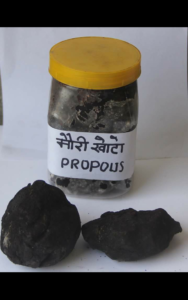
Propolis: Honey bee collect propolis to protect itself from enemy, pathogens and other environmental stress. High medicinal value product for ulcer, cancer and blood pressure patients. Price Rs.5000\6000 per kg. Propolis is composed of around 50% resins, 30% waxes, 10% essential oils, 5% pollen, and 5% of various organic compounds
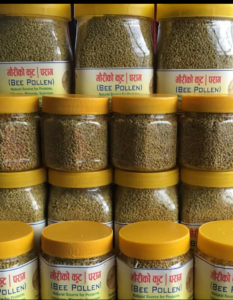
Bee pollen: Bee pollen refers to the flower pollen that collects on the legs and bodies of worker bees. Honey bees are best pollinator for flowering plants in world. The source of protein is pollen. Its market price is Rs.40000 per kg.
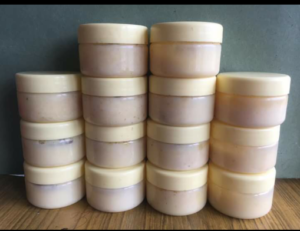
Royal Jelly: It is produced from the head of the workers which possess hypophargeal glands or milk glands. China has leading in world in royal jelly production. Price rs.1,00,000 per kg. Royal jelly is widely claimed to reduce inflammation and oxidative stress.
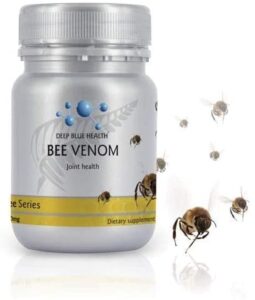
Bee Venom: It has lots of medicinal value. Certain instruments have been established to produce venom without any harm to bees. Price Rs 10,000 per 10gm. Researchers have discovered that bee venom kills the virus while leaving body cells unharmed, which could lead to an anti-HIV vaginal gel and other treatments.
INDIRECT BENEFITS
Pollination of food crops, medicinal herbs, lands and flowers.
Biodiversity Conservation.
Improve the environment and certain income generating opportunities.
Improve the health status of people.
It foster the sustainable development of the agriculture and enhaced
POTENTIAL OF BEE-KEEPING IN NEPAL
Suitable climate almost throughout the year.
Abundance and diversity of bees flora.
Large potential to produce bee pollen of very high quality.
Great potential to produce propolis, royal jelly and bee venom.
Potential of “Api-tourism”.
Federation of Nepal Bee keeper’s Association. 2000 commercial bee keepers, 10 honey processors, 15 bee hive manufacturer, 5 comb foundation sheet manufacturer.
Estimated that about 1 milion of bee combs carried over.
CHALLENGES OF BEE KEEPING IN NEPAL
Lack of suitable production techniques and skilled manpower.
Increasing pesticides use dry flowers completely.
Increasing cost of production.
Changing the cropping pattern.
Not easily available loan and subsidy by Government of Nepal (GON).
CONCLUSION
At last, I would like to convey my words to GON for the upliftment of bee industry as far as possible by realizing its scope, importance and potentiality of our country. I definitely assure myself that the knowledge I gained while preparing the article is necessary but not sufficient and I feel useless unless I spread my knowledge to needy ones this knowledge isn’t fruitful for me. Bee contributes to pollination for about 35% of world food crop production resulting in high productivity and yield of crops.
Writer/Author Sandeep Airee is a student studying agriculture. He has been writing various informational and informative articles on agriculture.


प्रतिक्रिया
सम्बन्धित खवर