Naresh Upadhyaya
Bsc.ag IAAS Paklihawa, Bhairahawa, Nepal
Introduction:
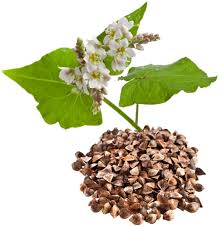
Buckwheat is a sixth staple food crop after rice, wheat, maize, finger millet, and barley
in Nepal. It is considered as an alternate cereal and poor man’s crop, representing an
important food supply in remote places of Himalayas. It is the best crop in higher
altitude in terms of adaptation to different climatic variables and easily fitted to different
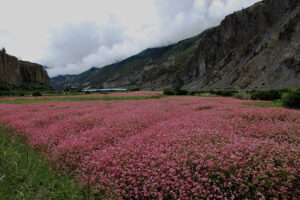
cropping patterns due to short duration. It is cultivated on marginal land in 61 out of 75
districts of Nepal from some 60 m to 4500 m asl, especially hilly and mountain districts
like Rukum, Rolpa, Jajarkot, Dolpa, Humla, Jumla, Kalikot, Kavre, Dolakha, and
Okhaldhunga. Sweet buckwheat varieties are generally grown in mid-hill and Terai but
Tartary buckwheat varieties are grown in higher altitude. There are altogether 19 local
landraces of sweat buckwheat and 37 for Tartary buckwheat listed from Nepal. The
largest producers are China, USA, and Russia and Japan is principal user of global
buckwheat grown in the world. In Nepal, it is cultivated in 10510 ha area with production
of 10355 t/yr and yield of 0.983 t/ha.To date, five species of Fagopyrum (buckwheat),
namely, F. esculentum, F. tataricum, F. cymosum, F. gracilipes, and F. megacarpum,
have been reported from Nepal
Benefits:
Buckwheat is a multipurpose crop and has been cultivated for its uses as staple food, animal
feed, vegetable, soup, beverage, and medicine . All parts of buckwheat plants are used in
varieties of ways. The leaf produced rutin important pharmaceutical product which is used to
brew tea used to treat hypertonia; flowers which bloom about one month produce good quality
nectar for honey; grain is the staple food; hulls of grain are used to make pillows; straw is good
source feed for livestock; and green plants are used as green manures..
There is a list of 34 food items prepared from buckwheat in Nepal such as dhindo (thick
porridge), roti (bread), momo (Chinese pancake), lagar (very thick bread), dheshu (thicker than
lagar), fresh vegetables, dried vegetables, Kancho pitho (raw flour), chhyang or jaand (local
beer), raksi (alcohol), salad (leaves), pickle (fresh and dry leaves), soup, ryale roti, Noodle, sel
roti, bhat (rice), sausage, dorpa dal, tea, vinegar, jam, macaroni, biscuit, cakes, mithai (sweet),
haluwa, puri, puwa, bhuteko Phapar (roasted grain), satu, phuraula, porridge, and pakauda.
Nepalese mountain people prefer dhindo than other items because of its specific taste .
Common buckwheat is mostly used as bread pancake attractive item to the tourist in the
tracking root of Mustang. Thick porridge prepared by mixing the flour of bitter buckwheat with
Uwa (Oat) or finger millet in 1 : 3 ratio is common food of poor people in hilly area. Buckwheat
has high nutrition because of balance amino acids and minerals as well as free from cholesterol
; nowadays, it is a preferred diet in urban areas. Both buckwheat species have pharmaceutical
value; the food of buckwheat has a preventive action on leg oedema, high blood pressure and
cholesterol, and cardiovascular disease . Major component of buckwheat is rutin, which is
higher in bitter buckwheat than in sweet one due to the high nutrients and pharmaceutical value;
Nepal has a great scope to export the buckwheat. Paste of Tartary buckwheat’s flour is applied
for treating wounds and fire burn, and its semi-cooked flour is used orally to cure cold, cough,
jaundice, and fever; fresh flour is good for dandruff treatment as well as for stopping hair fall;
flour paste is used in pimples and skin scratches; Tartary buckwheat flour drained water after
dipping overnight is used for epilepsy; tender, twigs, and leaves of wild buckwheat is used in
dysentery, pneumonia, and cholera and reduces the effect of poison; soaked flour is useful for
internal worms . Buckwheat flour is given to the sick goat and sheep. Common buckwheat is
also preferred by local people during the fasting on the religious occasions.
Conclusion:
The agricultural land of Nepal is very diverse due to varied physiography. The cropping pattern
is varied in different region of Nepal; it also depends on elevation, culture, and agriculture
practices of ethnic communities. Sixty-five percentage of total population still depend on
agriculture and contributed 36% for National GDP. It has also medicinal value used in different
forms including all its parts so the demand of buckwheat is increasing.
~ Naresh Upadhyaya Bsc.ag IAAS Paklihawa,Nepal
IAAS,Paklihawa


प्रतिक्रिया
सम्बन्धित खवर