Samikshya Bhattarai
BSC AG , 4th semester
INTRODUCTION
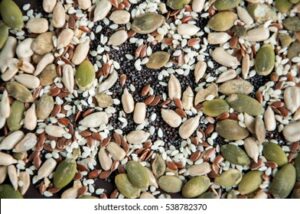
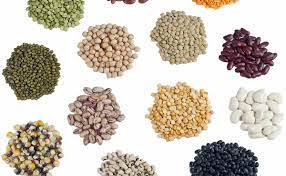
Botanically seeds may be defined as a fertilize mature ovule of a flowering plant that posses an embryonic ,stored food material covered by a protective coats which is viable and has got capacity to germinate under the favorable environment condition .Seeds are the most efficient and effective means of crop propagation and are the basic agriculture inputs that play a key role in the distribution of plant populations over the time and space. Seed are the first determinant of future plant development and key to success in cultivation which play a crucial role in developing resilient food systems that aid food security and nutrition and support the livelihood of farmers as well as other sectors. To refine agricultural prolificacy, seed delivery system will require a holistic attitude that considers access, affordability, availability, and incentives to adopt technological packages.
We are living through a time that will be remembered for many years to come as one of the uncertainty. With the COVID19,the world is facing unpredictable crisis that is posing new challenges , including to small holder farmers, seed system and seed security response. While the pandemic has placed many countries under lockdown and brought normal activities halt in many countries , including Nepal, in order to protect their people from COVID19 , this raises the possibility of affecting production , certification, distribution and cost of seed seriously.
Disruption in the supply of agricultural inputs like seed, fertilizer is certain to impacts food production. In order to prevent the breakage in supply chain of seed, related problem should be identified and solution measures should be carried on accordingly. Here are some problems and solution to seed sector during the havoc of COVID -19:
 PROBLEMS
The restrictions on movement imposed by government to protect their citizen from COVID19 have created the problem for all countries , but are likely to have great impact on developing country such as Nepal and the least developed countries, which have been hit particularly hard by economic downturn. Reduced access to high quality seed of modern varieties may causes issue with livelihood and food security in some countries, particularly in developing and least-developed countries. Movement and transportation restrictions may limit the supply of seed on the international market, and as prices rise, countries may struggle to compete for access. Some problems that have been faced by seed sector due COVID-19 pandemic are enlisted below:
- Lack of seed production inputs like irrigation, manure and fertilizers, pesticides, labour and site-specific varieties and package of practice (POP) for seed production.(lockdown)
- Seed prices had risen up and likely to rise in most countries due to low /less seed trade across the borders.
- Lack of improved tools and equipments like threshers, seed cleaners, seed sheller etc. available for quality seed production program.
- Shortage of human resource : both untrained and trained like seed technician , field inspection , seed sampler , lab analyst.
- Some countries have prevented farmers and seed industries from working in their field (area). As a result, the rate of seed production and trade is lower than in the past.
- It is time to plant in some areas and harvest seed in others, but at the peak of the COVID-19 outbreak, it is unclear whether planting and harvesting will be completed on time.
- Because any size gathering is now a threat to a community, farmers and other workers are unable to produce seed effectively.
- In the case of Nepal, due to the COVID-19 outbreak, imported seed is in short supply in the market, and the genetic diversity of indigenous plants is on the verge of extinction due to the country’s continued reliance on imported seed. In this scenario, seed crises occur, which eventually lead to food crises.
- Many conferences and seed fair has been cancelled or postponed due to this pandemic.
- Transportation costs are high due to a reduction in the number of commercial flights, fewer personnel available for production transportation and documentation, and a contraction in the plant and seed market, which is causing problems in terms of seed production for international trade as well as access to high quality seeds of modern varieties for domestic agriculture.
Depending upon how long the pandemic and associated confinements measures continue, the seed sector and its associated supply chain could feel impact of COVID-19 long into future.
International cooperation is critical to keep trade flowing in the wake of the COVID-19 situation, which has created enormous uncertainty. This COVID-19 period and seed could be an ideal moment for seed security assistance to understand how to maintain a continuous seed delivery system, one that can work even in the most remote and vulnerable states. To create a solution that ensures the timely arrival of agricultural seeds for planting, countries must work together to coordinate actions between governments and the private sector. Some solutions to the problems created by COVID-19 outbreak are enlisted below:
- Build on what we already know about seed system in stress. Small holder farmers commonly seek their seed from multiple sources. Some might come from what they have saved, some from social networks of friends, relatives and neighbours.
- Different countries are feeling the impact of COVID-19 in different ways, depending on the crop and season & allowing certification staff and seed companies to continue operating by obeying health precaution and social distancing rules is necessary.
- Conducting production activities based on direct participation of farmers through virtual meeting to increase the seed supply and sustain productivity level.
- Utilization of available ecological and biological diversity of indigenous plants.
- Initiation of community seed bank approach.
- Understanding the importance of the local agriculture sector and assisting them to harvest, process and sell the locally produced seed replacing imported seed.
- In the case of Nepal, infrastructure development like transportation, irrigation, and market facilities are critical to improving the post-COVID-19 seed trade within the country.
- Seed firms and organizations can work together to build coordinated initiatives that improve trade by communicating and harmonising their plans. Even nations with weak seed production sectors recognize the critical role that other seed producers play and are supportive of developing ways to make international seed trading more efficient.
- As the situation is always changing, policymakers and regulators must have access to accurate, reliable, and up-to-date information on a frequent basis.
Seed is the most important determinant of agricultural production potential , to increase productivity , on which the efficacy of other agriculture inputs is dependent . seeds of appropriate characters are required to meet the demand of diverse agro-climatic condition and intensive cropping system. The use of improved better quality seeds increases crop yield by 20-30 percent.
Considering the importance of seeds in agricultural growth and enhancing the living standards of Nepalese farm families, the development and transfer of new technologies will only be effective if farmers have access to quality seeds generated and routed through an efficient seed system. Constant growth in agricultural production and productivity is largely dependent on the creation of new and improved crop varieties, which is aided by an efficient system for delivering quality seeds to farmers on time.
Hence, government agencies, seed companies ,and various agricultural sectors should work together to identify priority initiatives for improving food system resilience worldwide. With the challenges of COVID -19 , now might be the best time to reinforce the seed system from inside and strengthen to a new level that ongoing markets may benefit smallholder farmers. COVID-19 will have an effect over an extended period of time, may be up to 2-3 years. We might strive for quality seed availability. This might be the prime time for all of us to learn and sharpen our approaches to strengthening the seed sector, especially the market channels that prove more resilient and most important for farmers’ seed security. Saving seeds could be the most strategic option at this time of COVID-19. Supporting and emphasizing the informal market could be even more so.
(BSC AG , 4th semester , Samikshya Bhattarai )