Basanta Pokharel
4th Semester, IAAS, TU
Introduction :
Quality and yield of grain is determined by the quality of seed. Scientific and systematic technique is necessary for the production of quality seed which ultimately increase the yield of the crop. The technical and managerial farming activities will help to increase the knowledge on quality seed production as well as livelihood improvement of farmers. As we know rice is the most cultivated crop and livelihood of Nepalese farmers, effective seed production plays a vital role for them.
Land Selection:
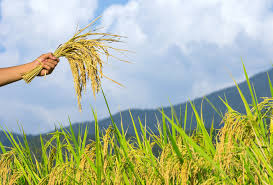
Land selection should be done in coordination with seed production group/ cooperative. Seed production plot should be fertile land in sunny area. The land should be free of volunteer plants. Land should have adequate irrigation and drainage facilities and the problem soils are not suitable for seed production.
Isolation:
The crop should have 3 meters of isolation at all sides of the seed production plot for maintenance of genetic purity however, it is self pollinated crop.
Seed Selection:
- Variety Selection: Seed variety should be selected in accordance with the seasons and agro-climatic conditions. Seed production cooperative should select the variety in coordination with DADO.
- Foundation seed confirmation: The warranty tag of the foundation seed received from DADO or other relevant agencies or other seed companies, should be checked whether this is the right or not.
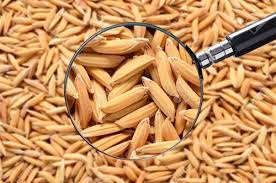
- Grading of seeds: Grading of seeds is necessary for quality seed production. The un-matured, light, and pest infected seeds can be removed by salt water treatment. The process of salt water treatment is given below:
- Mix around 2 kg of salt or 3 kg ammonium sulfate in 10 liters of water in a bucket.
- Put the paddy seed into the water.
- Remove the floated seed from the bucket. Floated seeds are those seeds which are un-matured, light and pest infected.
- Now collects all the matured and healthy seeds settled on the buttom of the beaker and must be washed with clean water.
Seed treatment:
- Hot water seed treatment :
- Before seed sowing in nursery bed, the paddy seed should be made wet in normal water for 4 hours
- After that, seed should be immersed in hot water of 60 ºC for 10 minutes and put it out from hot water.
- Then, the seeds should be dried in shade, and treatment with fungicide.
- Seed treatment with fungicide :
- To decrease the infestation of several diseases in paddy seed like blast, bacterial leaf blight, false smut, brown spot etc., the seed should be treated to protect from these diseases and other pests.
- Make the solution by mixing 5 gm. Agrimycene per 20 liters of water.
- Put 20-30 gm. of Bevistin powder in the solution.
- Then, add the 10 kg of seeds in solution.
- In this way, the bacterial and fungal disease can be minimized.
Nursery bed preparation:
For raising one hectare of paddy, 800m2 nursery is needed. The area should be prepared by floating the area one or two days before ploughing and allowed the water to soak in. Site for bed preparation should be selected near water source with a fertile soil. Seedlings become better and healthier if well fermented compost is applied before bed preparation.
Sowing:
A thin film of water should be maintained in the nursery, and the sprouted seeds of paddy should be sown uniformly on the seed bed.
Water management:
Drain the water 18 to 24 hours after sowing and if there are pockets where water is stagnating, drain it into the channel. Maintain the water level to a depth of 2.5 cm.
Weed management:
Apply pre emergence herbicides viz. butachlor @2l per ha or pendimithalin @ 2.5l/ha on 8th day after sowing to control weeds in the nursery. Avoid drainage of water to control germinating weeds.
Main Field:
Land preparation:
Around 50-60 bamboo baskets of well-fermented FYM have to be applied in one Ropani of land during the land preparation . Puddle the soil well and incorporate green manure into the field by in situ ploughing .Dig the corners and prepare the bunds well with plastering for effective stagnation of water .Apply the phosphorus and potasic fertilizers at last ploughing for effective availability of nutrients to plants.
Transplanting:
Nursery bed should be irrigated one day before for easy uprooting. While transplanting, about 2-3 seedlings should be transplanted at a place at 2-3 cm deep. The spacing between the rows should be maintained 20 cm; whereas, plant to plant distance should be 15 cm.
Water management:
After paddy transplantation, water level should be maintained 3-5 cm deep in the field for one month. At the time of seed ripening, there should not be water reserved in the paddy field, and water should be drained away if there is much water.
Weeding:
First weeding should be done after 25 to 30 days of paddy transplantation, and second weeding should be done after 25 to 30 days of first weeding again.
Top dressing:
The paddy plants should be top dressed at least two times with 2.4 kg urea per Ropani of land every time. It is necessary to have the water in the field during the time of top dressing.
Insect management:
- Army worm: Spray Cholophyriphos 20EC 80ml or endosulphan 35 EC80ml
- Thrips: Phosphamidon85 WSC 25 ml or Endopsulfan 35 EC 80 Ml
- Rice root nematode: Carbofuron 3gm at 3.5kg per cents
- White tip nematode: Sun drying of seeds for two days at 6 hrs interval
Disease management:
- Blast: Spray Mancozeb 80gm
- Brown spot: Spray Carbendazin 40 gm
Rouging:
It is the removal of all off types variety and rouges from the field. This is done to maintain genetic purity.
Harvesting:
When leaves and paddy grains became 80-90% yellow in color, the paddy can be harvested. Paddy should be harvested in sunny day. Lodged plants should not be selected for seed purpose. Irrigation must be stopped one week before harvest. Delayed harvest may lead to heavy shattering. Threshed produce should be clean and free of admixture in cracks and crevices.
Threshing:
Thresh the seed by beating the plants on a hard surface ,but take care that the seeds are not mechanically damaged. In tractor and machine threshing, avoid mechanical damage by proper adjustment of speed/machine setting. Clean the floor, equipment, containers to avoid genetic and physical mixture.
Cleaning and drying:
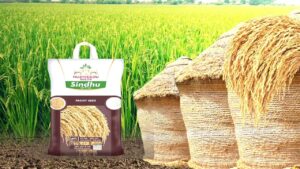
Threshed produce are cleaned and winnowed to remove the dirt and other unwanted physical material. The paddy should be cleaned by using hand operated and power operated winnowing fans. The seeds are dried in a threshing floor with adequate stirring known as tempering. The seeds are dried to 13 % moisture for better storage .On drying in a threshing avoid drying between 12 noon to 2pm to avoid the ill effects of ultra violet rays of noon sun.
Seed treatment:
Normally paddy seeds are not treated with chemicals owing to their economic utility. But for long term storage, treat it with captan or thiram or bavistin @ 2-4g / kg of seed.
Storage:
Seed storage refers act of keeping the seeds safe during the storage time until the seeds are sown or marketed. The storage structure must protect the paddy seeds from extreme heat or cold and moisture which cause microbial and fungal growth. Seed should be packed and stored on sunny day after well drying in sun for 4-5 times in metal bin, hermetic bag or plastic sack. The place for storage should be clean and safe from pests and mice. Use mouse trap in the storage to protect seeds from mice attack. Inspect the storage regularly to ensure occurrence of pests.
Number of inspections:
1.First field inspection: Nursery stage (within 20 – 30 days of seed sowing)
- Second field inspection: Plant elongation stage(after 25-30 DAT)
3.Third field inspection: Early heading stage (after 55-60 DAT)
4.Forth field inspection: Late heading stage (after 70-75 DAT)
5.Fifth field inspection: Heading – Milking stage (after about 3 month of DAT)
- Sixth field inspection: Harvesting stage (after about 4 month of DAT)
*DAT = Days after Transplanting
Conclusion: In this way, farmers can produce paddy seed in the field using suitable cultivar according to the agro-climatic zones.
References:
- SQCC, 2014.Notified varieties of crops in Nepal. Seed quality control centre (SQCC), Ministry of Agriculture Development ( MoAD), Pulchowk, Lalitpur
- SQCC, 2045 B.S. Seed Acts- 1988. Seed Quality Control Centre (SQCC), Hariharbhawan , Kathmandu.
- Paddy seed production techniques manual. jica. District Agriculture Development Office.https://www.jica.go.jp/nepal/english/office/others/c8h0vm0000bjww96-att/tm_5.pdf
- Seed production techniques in paddy varieties http://eagri.org/eagri50/AEXT392/pdf/lec09.pdf
Basanta Pokharel
4th Semester, IAAS, TU


प्रतिक्रिया
सम्बन्धित खवर